 "Beauty reaches far beyond art, music and literature, for it is characteristic of the natural world – creation. For beauty, like truth and like goodness, has its origin in God. So we mustn’t think of beauty as merely belonging to objects in the world, as if beauty were a quality like size or yellowness: beauty is in the relationship between the object and the person who comes into contact with it. The world is 'haunted' by the presence of God and we are the ones who register that presence. In John Ruskin’s expression, we are touched by the sublime, and our reaction is to be moved and thrilled by it".
Peter Mullen on beauty.
One of the most common objections I've come across to Christianity in many shapes and forms is that it is all too "other worldly" - to do with things we cannot see or really understand, but such definitions are usually the result of pretty unclear thinking. At the heart of Christianity is God evidenced in our world as a man who is born, suffers and dies with the rest of us (and it is in that place that He essentially tells us that all of this really does matter), but even before this, amongst the events recorded in the Old Testament, it is actually often the nearness of God (because there is a God who is involved with us) that is the problem, not His transcendence, and it is when this God conveys to us the astonishing depths of beauty and grace involved in the creation that we are not only often deeply troubled, but truly, totally drawn to the wonder and splendour of such endearment.
 It isn't by chance that some of the most inspirational poetry on creation and on love is found in the very core of these writings. The Psalms, Solomon's insights on Wisdom and the exquisite passion described in the Song of Songs come from a moment when God was truly seen to be present amongst a people who were catching a genuine glimpse of what human life is really all about - living in the 'glory' (the true meaning and value) of all that has been made and deemed good (in spite of our propensity to spoil it).
One of the highest expressions of all of this is the Bible's affirmation of the glory of erotic love.
The Song is literally dripping with moments that revel in the wonder of two persons becoming one, not just in a bodily sense (although the bodies of the lovers here are rightly and beautifully described), but in the fact that the sheer beauty of each of them becomes the true source of praise and meaning for the other, It is when just such a 'view' is truly in focus (in the key part, for example, of Chapter 2 of the poem), that the verse becomes so rich and tender:
"Arise, my love, my beauty, Come! The Winter has truly passed, the rains have gone, and the earth is filled with blossom. Now, the time of song has arrived, as fruit appears and ripens on the trees, The vines fill the air with fragrance. Come, my love, come away with me".
All good art touches us in this way. It lifts us, amidst our pain and decay, if but briefly, to look beyond this and to gain a scent of something deeper in our days here. Art photography echoes such aims, for even the most non-religious artists working in this field will speak of what truly matters in their work is moments of what can only be described as pure 'grace' - a linking with a beauty far higher than ourselves.
The aim, then, remains the same as Christ spoke of it in the Lord's prayer - to see the will of heaven (a God who cares for us in all of daily needs) here on earth - to touch, taste, smell and eat the 'romance' of reality... to be ravished by the beauty of the fact that in spite of our fall, we are so deeply loved, and art, amongst other things, can allow us to express and reflect upon something of that amazing grace.
The problem, perhaps, is not a God too far away, but a 'glory' that can be encountered within our very breath.
 Images:
Midsummer Morning at Tintagel, Model: Loella.Treasures of Grace. Model: Erin.Within the frame. Model:Kari.
 "Look at the world around you. It supplies all your bodily needs. It feasts your eyes with its beauty. Its glory is a reflection of the beauty of God. This is why such a reflection truly feasts our souls".
John Chrysostom
Simple Pleasures. Model: Peltigera.
It's probably the oldest evil - seeing beauty, and wanting to malign, mar, decimate it's charm out of sheer spite and jealousy. The beguiling of Eve in the maginficence of Eden came about through a creature that envied the naked splendour of beings intended for the greatest pleasures - union with each other, with the majesty of the creation they had before them, and with the giver of all good things. It has always been easier since to destroy (to murder what is good) than to create in a manner that affirms all that is excellent and true.
For much of its history, due principally to the incursion of dualistic concepts inherent to Hellenic schools of thought in the 2nd & 3rd centuries, Christianity has often placed itself on the wrong side of such issues, neglecting its cardinal marriage to the 'rightness' and goodness of creation.
Perpetuating the lie that true spirituality amounts to little more than the manner of moralism which covers us in the fashion that Adam and Eve employed after the fall, we fail to realise that such paltry disguises do nothing but alienate us from the true depths of both our plight and our joys in being human. Christianity defines both the malady and remedy to our exile from the natural delight of God's handiwork, so if the true aim, as the New Testament says it is, of faith, is a confidence in Christ's reconciling of the world, why do we so often fail to 'have life, and have it abundantly' - to really work through the value and goodness of the natural?
C S Lewis once observed the sheer joy that we can encounter in the straightforward 'normality' of life - the comfort and richness of the 'fit' of all that is normal and commonplace, and how this gives us a true insight into our real communion with being alive. There is, however, a 'jailer' who conjures against such charm, who worries to be busy when such moments are close, stealing such glints of wonder from us. That is why, I believe, it is imperative, as Paul writes, that we focus on ALL that is good, and pure, and lovely around us.

Splendour. Model:Kari.
Beauty, when properly seen, allows us to step, if but for a moment, beyond the narrowness of our present troubled lives and truly 'touch, taste, and feel', if but vaguely, the true, deliciously earthy splendour of all that was, is and will forever be good in the reconciliation that already 'is' in Jesus Christ. The jailer wants us to remain in our dark cave, to see all such cravings and insights as mere myth - shadows, at best, to mock us, upon a cold wall, but the work of God, in creation and redemption, say totally otherwise.
For much of my own life, I have been so very aware of the beauty, but in recent years, as I discovered a means to actively 'connect' in a more immediate way through photography, the 'fragrance' and the vital value of the message this brings have become far more vital. It is as we engage in this manner that we truly begin to hear and see the majesty of God's work, and thereby appreciate and esteem both the art and the artist, who's greatest desire is to share that wonder, and thereby true affection, with us.
 Contemplation. Model: Joceline.

"I was afraid, because I was naked"
Genesis 3;10.
It's a common problem. Since we first 'found' ourselves (or were discovered) to be stripped of our original estate of innocence tasted briefly in Eden, you can probably count on a few fingers the instances where physical nakedness today would be identified as good, and only one (a new-born child, both at birth and being cared for at home) where it would be deemed acceptable in a 'normal' situation. It speaks volumes about our society.
"Naked" Model: Katy.
A few years ago, a British TV channel showed a series of art programmes 'before the watershed' (9pm at night) which focused upon life drawing. The channel faced various and numerous complaints, but it's aim appears to have been to accompany a growing interest in life art, both using traditional mediums and digital techniques that has certainly grown in the last few years.
What should we make of this?
Are the critics right or wrong? Should an interest in the artistic aspect of the nude body be encouraged or deemed unfit for popular encounter - does theology have anything to say on the subject?
It's tempting for the Christian to dive into a concordance, dig up all the verses that talk about 'nudity' and 'nakedness', and come to some form of conclusion based on what is found there - there's certainly a breadth of passages that touch on this, and they certainly provide much to consider, but however much we'd like to examine and reflect on such materials, we still have to begin by looking at that moment spoken about in Genesis where Adam and Eve are found hiding and covering their bodies with what they could find - what is really going on here?
 I think the first thing to note is that this tragedy (the loss of something which truly made us 'innocent') has nothing whatsoever to do with physical nudity per sae. In the chapter before this, bodily nudity itself was clearly part of the 'natural' condition of living in the garden of Eden, and there clearly wasn't any shame in it, so the attempt to 'cover up' after this is telling us something far more important than that they suddenly wanted to wear clothes.
The 'nakedness' ('arowm') of people in the culture of Eden was good, but the 'nakedness' ('eyrom') that makes us hide ourselves from each other and God is an alien thing - an evil which destroys the openness and beauty we had been created to know.
The Fall. Model: Pamela.
We can see in the very words and action of hiding, fearful humanity an 'evolution' that was foreign to the true goodness of and the right community in what was meant to be part of what we inherently are as persons made in God's image and how we inter-act we each other as a result of that. It is this 'new' manner of 'nakedness' (being creatures stripped of our original estate and worth) - that which defines us as broken, ashamed and alienated from what was made good - which has marked us all. It is the hallmark of death, not just in a physical sense, but in the loss of our true identity which resides at the heart of such a state.
The theological approach, then, to such nakedness is clear. When we speak of any action, event or process which demeans or negates human being into being far less than what we were designed to be, then it is to be rejected as blindness of the most terrible kind. If the nude is depicted in a manner which supports and encourages an ideology of evil, then it is itself destructive, but if works of art and cultural events occur which cause us to see our true plight, glimpse our true purpose, these are good, indeed necessary. Such forums, from the straightforward apprehension of beauty, to works which cause us, far more deeply, to ponder our days, therefore can indeed have a true worth, and that is why I would say it is good, indeed right, for Christians to engage with and be involved in art which employs the nude.
The aim, as defined by Christ Himself, is to show the world once again life beyond the bonds of our present pain, sorrow, misery and tragedy, evidenced in God with us, in body and bone, showing that even here and now, there is so very much more. If something of what we do and say points or even hints at that truth, then there is indeed a beauty amidst the ashes.
 Wonderfully made. Model:Magenta.
 "Then, with rejoicing, they entered, to partake of the tree of life...
and its fragrance shall be within their bones, and so shall they live upon the earth".The book of Enoch 14:6.
Motherhood. With thanks to Mum and new arrival.
It's been a very different year. Due to the Financial turmoil of the times, my work with most models has had to be reduced greatly, but this has opened some unexpected opportunities to create art nudes in what might be termed a very 'down to earth' fashion.
 The first came in the summer, just after the recovery of my Imac. A couple who had seen my work on-line wanted to know if I could create some fine art images for them in the spacious grounds of their North Devon garden, and I was happy to assist.
Fusion. Model: Tara
The results were satisfactory, and another shoot followed in September on a remote Cornish beach on a truly splendid day. The couple were so delighted with the results that they have produced their own personal book of the work.
This special opportunity was followed with another in the same month. A Cornish model who I had previously worked with had just had a new arrival, and asked if I would come to her home to take some natural images of herself and the new baby. I was delighted to do so, not only to renew my creative association with her, but to have the opportunity to be engaged in a truly wonderful moment - of capturing something so special in her and her child's life.
 In both these cases, what was so clear was how delight of and enjoyment in the total natural beauty of the naked body was truly good and so natural - there was nothing demeaning about any of these endeavours. It made me realise afresh that it is within this sphere - within the bonds and splendour of everyday life, be it a mother with her child, or a husband and wife who have loved each other for many years - that the true source of renewing our attitudes to the wonder of our forms begins.
Together...
If we can learn, here, within the nurture of the love of our family and those closest to us, that the body is truly a wonder to be honoured and cherished, not in some contrived ascetic manner, but as a living temple of the One who made it good, then we can begin to encounter and know life and the world afresh.
I have been truly honoured in my time behind the lens, as so many of the subjects I have worked with have known or learned that it is when the natural delight in the beauty of the person is allowed to become the focus of a creative moment, that something truly worthwhile can be captured in a series of images. Just as fellowship with God and creation is truly about something crucially natural, the same is true, I hope, in my work in this field of art.
It is certainly a truth which we can at least seek to aim towards.

Model: Tara.
The Cornish coastal shoot:
Find more videos like this on Miss Online
 "Of the three operations of the mind - apprehension, judgement and reasoning - only one of them is distinctively human, and it's not the one most people guess. It's not reasoning - primates do that - and it's not judgement (all animals know what they prefer), no, the uniqueness of our minds lies in simple apprehension - in our ability to form concepts, to extract essences, by means of words...It is not far-fetched to see our ability to name, to define, as another intimation of being made particularly in the image of the Word". Robert Farrar Capon - Words.
Very good. Model: Erin.
It was wonderful here on Friday evening - one of those truly gorgeous, mellow moments, pivoted between summer and autumn, that beckons you to come and encounter it's ravishing calm and taste it's exquisite tranquillity and enrichment. I have never been able to resist such splendour, so as the heat of the sun gave way to the cool of the day, I found myself, reflecting, as I often do, as I walked a favourite path, on the beauty of nature and the marvel that must have been Eden.
Genesis 2 speaks of how God had furnished this place with the manner of elegance I could see on my excursion - lush, green pastures, clear waters, and spaces abundant in fruitful trees; surely, enough to fill the eye and feed the soul, but all was not good in this realm of delight. However splendid and engaging it's rich provision, God knew there was a void in the heart of paradise.... Adam was alone.
Anyone who has ever deeply cared for another knows how deep that void can be, but Adam's awareness of his need grew, as he began to comprehend and inter-act with the new world around him - nothing that had been made to that point could complete, could assuage, the growing understanding with him that there was a terrible capacity and need within him - to be one with someone, to truly apprehend and know someone like himself.
I often wonder what that moment, when he awoke from sleep, to see Eve for the first time, must have been like. It was certainly profound in regards to true affection, perhaps something like this...
The only genuine response is one of affection, for our whole being is affected by such wonder.
In the days and ages which were ahead, both for Adam and Eve, and the rest of us, life teaches that, even amidst thorns and thistles, pain and anguish, all that we apprehend and engage with in this realm is only truly seasoned well when our engagement with it is sourced from an essential understanding - true well-being belongs to the soul that is not alone. At the very core of our endeavours is meant to be a love which creates, encourages and assists us to live and know a richness of life that makes our engagement replete with value and meaning.
 "The will of God", notes Capon, "may well not be His recipe for my life but rather His delight in my recipe... We often look upon the love of God as a Father for a child, but the true image is precisely that of lover and beloved, bride-groom and bride - it is the marriage of the church to Christ that is the (true inaugural) moment in the love-affair between God and creation".
Contemplation. Model:Erin.
It is because such 'romance' is at the heart of all things that art matters. Creativity is part of our true apprehension of all things. Science often causes us to stagger at the universe, but art allows us to join with creation in seeking to celebrate, to honour, the splendour.
The Friday walk allowed me to consider all of this, and those considerations made the beauty of the 'art' (God's handiwork) which surrounded me a balm in my current situation - having known what it is not to be alone, in the wonderful years with Kay, but finding myself alone now... the joy and the pain, as Lewis notes, are entwined. The setting sky gives way to darkness often in our presently broken world, but there is indeed a love stronger than death, and all of His good gifts woo and entice us to see, to smell, to taste, the goodness of that approaching union for ourselves, in the wonder of our apprehension.

Harmony. Model: Magenta.
 "So we are faced with the alternative of being free and living dangerously,
or renouncing a life of our own and being in bondage.
And there can be no doubt about the choice to which we are challenged in scripture -
the person who loves life loves liberty, and will say 'yes' to living, in spite of all their own limitations and fears.
True security is to be found, not in the renunciation of freedom, but only in freedom's (true) foundation". Jurgen Moltmann - The Spirit of Life.
Balance. Model: Katy T
Sometimes life comes at you head on.
This week, for example, amidst a range of questions from a correspondent from America, came this one - how do you justify that the Song of Songs is included in the Bible?
We'd been discussing how the faith and scripture brings genuine fruition in our lives, but he was truly puzzled why something so earthy would be deemed or viewed as divinely inspired.
It's an all too common problem. As Moltmann notes in his work quoted above, 'the Western divide between spirit and body, spirituality and sensuousness, is so deeply rooted that we must redress this by opening the true union given and restored by God".
The misreading of Christian theology has so often caused many to place anything and everything to do with 'the flesh' (our life in the here and now) into the category of evil and therefore beyond aid and of no value.
The reality, of course, is very different - it is this world (creation) which, redeemed from sin and death, is being reconciled to God in Christ, and it is in these bodies, redeemed, sanctified and glorified, that you and I shall one day see creation made whole. The issues raised by Christianity, then, are anything but dualistic in nature - they are strikingly fleshly, which is where art can help us.
 All of life is meant to be a means of re-connection to what has been lost, a true journey of coming home. When we find ways and means of engaging our passion for life once more to facilitate that reality for ourselves and grant an enriching of others, then we catch a scent, or experience a foretaste of what redemption is all about - the complete renewal of all good things.
Serenity. Model: Magenta.
C S Lewis notes at the end of his Abolition of Man essay that genuine connection to the world is not reducing everything to a point of meaninglessness, but, like sitting at a window before a garden, having the means (a transparent material in this case) to allow us to truly see and value what is there. Art, when it is sourced from our passion to truly participate with our home (the earth) is just such a means, and that should be, indeed must be the case when it comes to the temple of the human body.
The reason why the Song of Songs, a gorgeously erotic love poem, is part of scripture, is because it affirms God's delight as well as our own in the passionate, in the sensual and in the marvellous aspects of bodily love and adoration. None of these gifts are evil, it is only the abuse of these by demeaning ourselves and others, our 'priesthood' and theirs, which is wrong. The love of God (agape), allows us to rightly love each other (philia) and this is often expressed in the most 'earthy' (eros) of ways, not just in sexual union between husband and wife, but in our valued social inter-actions which facilitate a realm of good (hence, the statue of Eros on the Shaftsbury memorial in Piccadilly Circus in London).
The image of Eden shows us that genuine spirituality is entirely natural. The temple is a garden. The priests of creation are Adam and Eve, naked and unashamed, tending the realm they inhabit, and fellowship with God is as natural as a conversation as we walk together with Him in the cool of the day. As Jesus hangs upon the cross, carrying our sin and shame, He tells the needy thief who trusts upon Him that this very day, He would be in such a place... that is the entire aim of redemption.
I hope that my correspondence with my American friend will, amongst other things, help him to look at the Song of Solomon in a fresh way, and I hope that some of my photography will delight some in the discovery of the true wonder of these living temples that God has given to us. Yes, we are often twisted and broken, but even amidst such travail, we sometimes see a reflection of the glory that is to come, and that helps to affirm the value of our days, our confidence in the promise of His redeeming love.

Aliento. Model: Joceline.
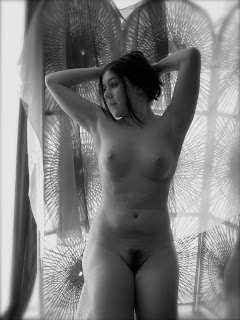 "Art serves as an extension of our flawed human existence. We cannot escape it. Even as we, in our art, attempt to describe things that occupy an immortal or super-natural space, those expressions will be bound to the bruised, ragged, disconnected, untamed and under realized mediums of the human mind, eye and hand. If we are not comfortable with this, our art will be swallowed by our pursuit to escape those bounds, and will cease to tell the truth". Dan Hesaltine.
Clarity. Model:Kari
Do you recall the first time you ever heard a piece of music or verse or saw an image that totally held you, challenged you, provoked you to look at the world in a fresh way or turned your assumptions upside down?
I suppose that's been the aim behind many modernist art movements, but generally today the shock -if there is any - doesn't usually last long... the controversy is usually contrived, the presumptions are generally cloned (we're all pretty worthless and life is actually meaningless) and the entire engagement is so often (either immediately or on reflection) disappointing.
Back in October, I wrote a little about one of those personally striking moments - viewing Michaelangelo's David in London some years ago, but there have been many others. The reason I raise this encounter again is because it says something deeply to me about what art can do - it can invite our sense of wonder, of beauty and of awe to breathe, often amidst painful or troublesome times - that splendid freshness, as many have discovered, allows some joy and truth to be woven within the bruising of our present humanity.
It would be easy to draw the wrong conclusion here - we want 'valuable' art to be attributed with such grand associations because we want our world, our lives, to amount to something, hopefully replete with value and meaning, but that is a superficial way of looking at what is occurring. Art imbued with beauty and grace can actually be hard to accept, even highly offensive, because such stark impositions of such light upon us can jar against our experience of the all too present pain and futility which so often perpetuates as the daily 'drudgery' of life - to seek to 'say', in some fashion, that there is more - a richer, inspiring reality, can not only make for offence, but generate violence within the soul against such expression - perhaps initiating its very own 'counter' creative expression, or, encouraging a genuine expression of our plight in the light of such glory.
This can certainly be evidenced in the case of depicting the nude. Many times when looking at the work of others, you quickly realise that Jock Sturges was correct in his way of looking at an image - there are 'negative' images, which harm or disturb the viewer, 'neutral' images, which actually say and do nothing, and (what I would term) 'natural' images, which truly reflect and express something of the grace that is within our world. Many nudes today are 'negative', some rightly so, to make us aware of something we need to see, but many are virtually cannibalistic in the way they want us to see and engage with the 'person', in part or whole, depicted in the image, appealing to nothing above the carnal - there is more than enough pulp culture to pamper to often reductive notions of our worth (sensuality has its place, but it shouldn't be the dark, cold squalor of human manipulation and/or corruption).
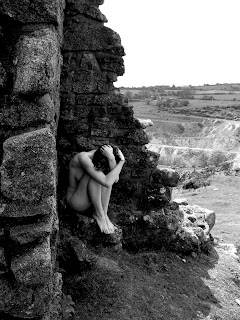
Wounded. Model:Vicci.
As noted, even some darker work can speak to us, so there is equally the pain of those who corrupt the value of such art, not by demeaning the person by the manner the nude is used, but by rejecting the value of nude expression in art entirely, declaring that anything 'spiritual' cannot possibly be demeaned to something as low as human flesh.
From a theological perspective, nothing could be further from the truth - Christianity is based upon just such a "folly". From a human perspective, any encounter with a work which lifts our vision to a richer place is of value, so if we are seeking to negate that value, we need to seriously question why.Since beginning this blog, I've sought to say why I think nude art matters. Is this valid in the current culture we face? What are your thoughts?
 "Beauty reaches far beyond art, music and literature, for it is characteristic of the natural world – creation. For beauty, like truth and like goodness, has its origin in God. So we mustn’t think of beauty as merely belonging to objects in the world, as if beauty were a quality like size or yellowness: beauty is in the relationship between the object and the person who comes into contact with it. The world is 'haunted' by the presence of God and we are the ones who register that presence. In John Ruskin’s expression, we are touched by the sublime, and our reaction is to be moved and thrilled by it".
  It isn't by chance that some of the most inspirational poetry on creation and on love is found in the very core of these writings. The Psalms, Solomon's insights on Wisdom and the exquisite passion described in the Song of Songs come from a moment when God was truly seen to be present amongst a people who were catching a genuine glimpse of what human life is really all about - living in the 'glory' (the true meaning and value) of all that has been made and deemed good (in spite of our propensity to spoil it).


