 "So we are faced with the alternative of being free and living dangerously,
or renouncing a life of our own and being in bondage.
And there can be no doubt about the choice to which we are challenged in scripture -
the person who loves life loves liberty, and will say 'yes' to living, in spite of all their own limitations and fears.
True security is to be found, not in the renunciation of freedom, but only in freedom's (true) foundation". Jurgen Moltmann - The Spirit of Life.
Balance. Model: Katy T
Sometimes life comes at you head on.
This week, for example, amidst a range of questions from a correspondent from America, came this one - how do you justify that the Song of Songs is included in the Bible?
We'd been discussing how the faith and scripture brings genuine fruition in our lives, but he was truly puzzled why something so earthy would be deemed or viewed as divinely inspired.
It's an all too common problem. As Moltmann notes in his work quoted above, 'the Western divide between spirit and body, spirituality and sensuousness, is so deeply rooted that we must redress this by opening the true union given and restored by God".
The misreading of Christian theology has so often caused many to place anything and everything to do with 'the flesh' (our life in the here and now) into the category of evil and therefore beyond aid and of no value.
The reality, of course, is very different - it is this world (creation) which, redeemed from sin and death, is being reconciled to God in Christ, and it is in these bodies, redeemed, sanctified and glorified, that you and I shall one day see creation made whole. The issues raised by Christianity, then, are anything but dualistic in nature - they are strikingly fleshly, which is where art can help us.
 All of life is meant to be a means of re-connection to what has been lost, a true journey of coming home. When we find ways and means of engaging our passion for life once more to facilitate that reality for ourselves and grant an enriching of others, then we catch a scent, or experience a foretaste of what redemption is all about - the complete renewal of all good things.
Serenity. Model: Magenta.
C S Lewis notes at the end of his Abolition of Man essay that genuine connection to the world is not reducing everything to a point of meaninglessness, but, like sitting at a window before a garden, having the means (a transparent material in this case) to allow us to truly see and value what is there. Art, when it is sourced from our passion to truly participate with our home (the earth) is just such a means, and that should be, indeed must be the case when it comes to the temple of the human body.
The reason why the Song of Songs, a gorgeously erotic love poem, is part of scripture, is because it affirms God's delight as well as our own in the passionate, in the sensual and in the marvellous aspects of bodily love and adoration. None of these gifts are evil, it is only the abuse of these by demeaning ourselves and others, our 'priesthood' and theirs, which is wrong. The love of God (agape), allows us to rightly love each other (philia) and this is often expressed in the most 'earthy' (eros) of ways, not just in sexual union between husband and wife, but in our valued social inter-actions which facilitate a realm of good (hence, the statue of Eros on the Shaftsbury memorial in Piccadilly Circus in London).
The image of Eden shows us that genuine spirituality is entirely natural. The temple is a garden. The priests of creation are Adam and Eve, naked and unashamed, tending the realm they inhabit, and fellowship with God is as natural as a conversation as we walk together with Him in the cool of the day. As Jesus hangs upon the cross, carrying our sin and shame, He tells the needy thief who trusts upon Him that this very day, He would be in such a place... that is the entire aim of redemption.
I hope that my correspondence with my American friend will, amongst other things, help him to look at the Song of Solomon in a fresh way, and I hope that some of my photography will delight some in the discovery of the true wonder of these living temples that God has given to us. Yes, we are often twisted and broken, but even amidst such travail, we sometimes see a reflection of the glory that is to come, and that helps to affirm the value of our days, our confidence in the promise of His redeeming love.

Aliento. Model: Joceline.
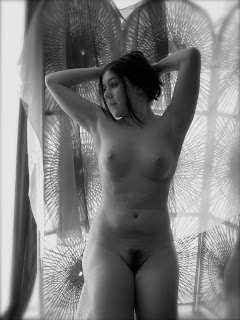 "Art serves as an extension of our flawed human existence. We cannot escape it. Even as we, in our art, attempt to describe things that occupy an immortal or super-natural space, those expressions will be bound to the bruised, ragged, disconnected, untamed and under realized mediums of the human mind, eye and hand. If we are not comfortable with this, our art will be swallowed by our pursuit to escape those bounds, and will cease to tell the truth". Dan Hesaltine.
Clarity. Model:Kari
Do you recall the first time you ever heard a piece of music or verse or saw an image that totally held you, challenged you, provoked you to look at the world in a fresh way or turned your assumptions upside down?
I suppose that's been the aim behind many modernist art movements, but generally today the shock -if there is any - doesn't usually last long... the controversy is usually contrived, the presumptions are generally cloned (we're all pretty worthless and life is actually meaningless) and the entire engagement is so often (either immediately or on reflection) disappointing.
Back in October, I wrote a little about one of those personally striking moments - viewing Michaelangelo's David in London some years ago, but there have been many others. The reason I raise this encounter again is because it says something deeply to me about what art can do - it can invite our sense of wonder, of beauty and of awe to breathe, often amidst painful or troublesome times - that splendid freshness, as many have discovered, allows some joy and truth to be woven within the bruising of our present humanity.
It would be easy to draw the wrong conclusion here - we want 'valuable' art to be attributed with such grand associations because we want our world, our lives, to amount to something, hopefully replete with value and meaning, but that is a superficial way of looking at what is occurring. Art imbued with beauty and grace can actually be hard to accept, even highly offensive, because such stark impositions of such light upon us can jar against our experience of the all too present pain and futility which so often perpetuates as the daily 'drudgery' of life - to seek to 'say', in some fashion, that there is more - a richer, inspiring reality, can not only make for offence, but generate violence within the soul against such expression - perhaps initiating its very own 'counter' creative expression, or, encouraging a genuine expression of our plight in the light of such glory.
This can certainly be evidenced in the case of depicting the nude. Many times when looking at the work of others, you quickly realise that Jock Sturges was correct in his way of looking at an image - there are 'negative' images, which harm or disturb the viewer, 'neutral' images, which actually say and do nothing, and (what I would term) 'natural' images, which truly reflect and express something of the grace that is within our world. Many nudes today are 'negative', some rightly so, to make us aware of something we need to see, but many are virtually cannibalistic in the way they want us to see and engage with the 'person', in part or whole, depicted in the image, appealing to nothing above the carnal - there is more than enough pulp culture to pamper to often reductive notions of our worth (sensuality has its place, but it shouldn't be the dark, cold squalor of human manipulation and/or corruption).
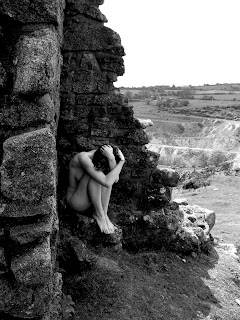
Wounded. Model:Vicci.
As noted, even some darker work can speak to us, so there is equally the pain of those who corrupt the value of such art, not by demeaning the person by the manner the nude is used, but by rejecting the value of nude expression in art entirely, declaring that anything 'spiritual' cannot possibly be demeaned to something as low as human flesh.
From a theological perspective, nothing could be further from the truth - Christianity is based upon just such a "folly". From a human perspective, any encounter with a work which lifts our vision to a richer place is of value, so if we are seeking to negate that value, we need to seriously question why.Since beginning this blog, I've sought to say why I think nude art matters. Is this valid in the current culture we face? What are your thoughts?

"There is a distinction between an interest in a person's body and an interest in a person as embodied. A body is an assemblage of body parts; an embodied person is a free person revealed in flesh. When we speak of a (truly) beautiful human body we are referring to the embodiment of that we encounter.... connection is always a move from ourselves towards the richness of another - a summoning of the other to the surface of their being".
Roger Scruton - the beauty of the body.
Have you ever been out somewhere and stumbled upon a place for the first time and found yourself truly overwhelmed by a sense of delight in doing so? I sometimes wonder if that is what it's like to do certain things - exploring the magnificence of a coral reef, perhaps, or seeing the earth from out amidst the stars - moments beyond the 'normal', which remind us of just how staggering it is to be here.
The marvel, of course, is that such joy and can be ours in any number of immediate situations, and these can just as quickly and deeply ravish our hearts and minds. The 'vital ingredient', I'd suggest is how such moments bring a deep sense of connection, yes, to the here and now, but they also do more. We relish such moments because they make us aware that each of us are truly and rightly 'connected' to creation, and truly, to each other.
One of my true joys for many, many years was making such discoveries with my late wife; finding such riches is wonderful, sharing that discovery with someone truly significant really multiplies the joy of such a moment.
Beauty, expressed in nature and art, convey a true 'sense' of freedom (wholesome, meaningful engagement), because they both allow us to taste an expression of what should be true for each of us - a revelling in the true weight (glory) of deeply enjoying life in a fashion that is not broken or twisted by pain or evil. The current image, of course, is limited due to those corruptions. Our deepest moments of joy now are often jewels embedded amidst times of great trial or suffering, but that context itself can in some strange way truly accentuate what is good and is beautiful. The 'healing' of beauty, then, weaves something remarkable into the fabric of our broken world.
 As a photographer of the nude and a Christian, I'm often aware of the often unwarranted scrutiny and rejection of some regarding my passion. "It's not wholesome" or 'righteous", goes the thinking, to be so employed in such a field, but there is a basic flaw in such thoughts. The artist is someone who, like the person in my first example, discovers a wonder. They may, on occasion, need 'kit' (an aqua-lung or space suit...in my case, just a camera) to really explore that wonder, but to deem it 'unworthy' of understanding would be foolhardy.
God gave our first parents a mandate to engage with the amazing universe in which He had placed them- Eden was a place filled to bursting with such splendour, and in spite of the fall, our realm still sings loudly of that same enchanting, enriching gift.
Yes, it is possible to treat life and the human form in a very superficial manner, to blind ourselves to nothing more than anything immediate and selfish (- that, I think, is a great evil -) but the nude, when not met in such pathetic definitions, 'preaches' to us immediately our need to recognize a divine handiwork and that what we encounter is not merely an object, but a person - a living being made for connection, for intimacy. All of this allows the artist to truly sense a deep worth and privilege as they seek to work with another made a little lower than the angels, but crowned with such glory. It is that wonder that infuses and exudes from true figure art, which in itself furnishes a deeper connection between the artists themselves and also those viewing the finished work.
I've never 'taken the plunge' underwater, and I doubt I'll ever see the world from space, but I know what it is to be enthralled and overwhelmed by the magnificence and significance God has placed within and through and amidst all of His handiwork. The beauty of the nude most certainly comes within that scope, and should truly give it due place and significance in our defining of the glory and freedom He makes ours.

Images:
Held. Model:Erin
The three graces. Models: Erin, Magenta, and Jen.
Contemplation. Model: Magenta
All images by Howard

I listened with delight as the physicist grappled with the conundrum....
"If anything should exist at all, well, it should all be, purely, light... so why are we here? We're continuously having to come up with new and more exotic particles to unpack the nature, the enigma, of matter, and that's just at the most basic level, without getting into the real mechanics of how it all configures into this marvel we see around and within ourselves"....
The 'dust' itself, then, is still a mystery, but how that dust 'springs' from light, becomes so diverse, and, wonder of wonders, then becomes capable of comprehension, of contemplation... that is truly profound. And what dust we are.
Whilst electronically "trawling' today for a clip to inspire or aid my thoughts, I found myself watching again that gorgeous moment in 'As good as it Gets' when Carol's beauty (played by Helen Hunt) is spied by Simon the Artist, and he encourages her to pose for him as he becomes inspired and entranced by the charm of her form. It's a good illustration of the moment which artists live to encounter, when beauty becomes so pervasive, you long to engage with it's sublime richness, whether using a pen, a brush or a camera to do so.
 Most of us have stood breathless at the sight of some natural wonder - the canopy of the heavens, the radiance of a painted sky or the heart-felt pleasure of a rich, welcoming landscape. Scientists, I think, often encounter that same marvel when they see or ponder the simplicity and elegance of the physical realm, but I have found that it is when these graces are so richly blended in the line and art of the human form, clothed in the often unequaled maginficance of warm, endearing light, that we look upon perhaps the highest natural expression of physical beauty.
The ' dance' between this form and light "speaks" loudly of our inherent, 'natural' spirituality, for all truly 'good' things are so in their most 'basic' sense - the handiwork of the divine. As in the case of light and matter, where the connection is so plain but so profound, so is our marriage to heaven and earth... formed of the clay, but 'containers' of a life, a shocking breath, that is not our own.
The interplay between natural light and the marvel of flesh never ceases to stagger me, and it speaks so well of greater things.
The scientist, the artist, the person who delights in all good things, will continuously joy and affirm this wonder as, perhaps, one of the deepest treasures that they can know and share when speaking of this present life.

Images of Erin by Me.
 What we see depends mainly on what we look for. ~John Lubbock.
Noelle by Jan Doef
Illusion... it's as plain as the nose on your face, but usually just as difficult to spot.
The common enticement today is to embellish - to make reality 'better' by adding the latest 3D, holographic or photo-shop effects, so that what is displayed is deemed palatable, preferably desirable in the cinema, video game or magazine. Virtually every image you view in printed or popular media has been 'tweaked' so that it will conform to some ideal.
There's nothing new here - the Greeks 'perfected' the human form in their use of art some millenia ago not so they could have a nice way to decorate Athens, but because they were seeking to manifest their concepts of the divine - a key aspect in numerous expressions of spiritual miss-direction (as any study of the philosophy behind this attempt would show).
Reality is a much harder message to sell. In his collection of insights on life, Solomon notes that true wisdom is like a messenger amidst the streets, standing amongst the hustle and bustle of the commonplace, seeking to call us to something richer, but very rarely heeded.
The question for someone like me who seeks to engage with reality - to grant that truth value by means of art - is what 'embellishments' are we keen to daub upon this within a Christian context, especially in regards to the place of the human form?
I have little doubt that few Christians today would feel comfortable being devotional in a space where any form of nudity was present, and yet, amidst some of the earliest locations used by believers, depictions of nakedness in baptism or in depicting biblical stories (Jonah and Daniel) were not unknown, and this in itself tells us that attitudes have certainly changed and become 'airbrushed' in fairly recent times, particularly due to the changes in sanitary and accompanying moral arrangements since the Victorian era, but the bigger 'editing tool brush' in the box actually stems from the same root of idolatrous inclination within us as expressed by the Greeks.

As I noted before, Hellenic society wasn't seeking to 'glorify' the natural beauty of women, for example, through the means of art - most of the famous Greek philosophers detested artists and women were usually viewed as mis-shaped souls - it was purely to reach for an ideal, as exemplified in our own times in National Socialist use of such mediums. The reason behind such aims was to look beyond the present natural order - the common, earthy, natural world around us, which was only evil, only fit to be a temporal prison of the immortally higher, purer inner being or soul... that was where our true value was discovered.
How much of our perspective has been 'edited' in this fashion, to become blinded to the natural beauty which God conveys amidst our broken world? How often does our presumptions blind us to ever seeing the quiet splendor of His handiwork, be it in our surroundings, some sublime moment, or the still, enchanting grace of the human form?
Yes, there are dangers, toils and snares in all of life, materials which label themselves 'nude art' included, but if grace is what feeds us, sustains us and keeps us, will we not often see the majesty and splendor of the one who clothes us, like the lilies of the field, with a 'glory' no other material attire can match?

Veiled Modesty by Corradini
These questions matter, because we so often become 'boxed' by the modes and mistakes of philosophies that cause us to invest in an approach which is counterfeit, rather than unpacking the inherent richness of what has been bestowed, and having the blessing of sharing that with others.
Illusion simply becomes unsatisfactory and temporary when the true value of actual beauty becomes understood and takes center stage...
 "In art photography, the nude figure is all about the spirit".Dennis Mecham.Just under a year ago, this image of model Sasha Grey was seen all over the country (the UK) as part of an advertising campaign for the charity fighting breast cancer. The fact that she appeared nude (aside from a well placed cloth depicting the campaign's logo) merely added to the directness of the visual power of the poster, and, so far as I'm aware, no one was troubled by the use or impact of the human form in this context. The campaign was certainly successful in the sense of getting noticed, but it made me ponder once again why, in a society which is well-nigh saturated with illicit and demeaning depictions of the nude, that the one thing we publicly see so little of is images which cause us to stop in our tracks and truly delight in the beauty of the human form.
Dennis Mecham's insight is spot on. The 'trouble' with genuinely artistic nudity is that it causes us to look both upon the grace within an image and experience the shock-wave of that wonder within ourselves. After many years of working in this field, I know just how deeply this can impact upon my own being, bringing moments of genuine wonder and delight, so perhaps the problem is that most of us would find it highly troubling to be 'startled' in such a fashion by an enchanting figure work depiction. Or would we? The Breast Cancer campaign suggests it's all a matter of context - that if the aim is good and the composition is agreeably arresting, then the response is constructive, at least in general. So should meaningful nude art become more 'mainstream' in our world. I think it should.
Changes in networking groups at the end of last year meant that I had to find new ways and means to display my fine art nude compositions created as video slide-shows, and this provided an opportunity for the productions to field to a wider audience. The results have been highly positive, and, in some cases, have allowed some to look at the nude with fresh eyes - to begin to encounter and engage with the truly spiritual nature of what it means to be human.
Nudity in it's true garb is a marvel that can bring us closer to the art of our Creator.
Perhaps future public art and campaigns will allow further 'opening' of this enriching 'window'.
Dennis Mecham's You Tube Video on the value of Nude Art:
 Nude photography is unlike any other field of taking images;
you require total involvement with the subject,
mutual understanding, especially regarding what you are
seeking to create,
and an overwhelming sense of trust and responsibility.
Lucien Clergue
Image of Patti by Tom Cubbage from the 'Dreaming of Georgia' series.
Faith and Art can often be discussed in the most remote, the most distant of terms, as if such were something deposited in a dreary museum display case, now confined to some remote corner of the stores, moth-balled and long forgotten. The reality, of course, is very different.
Christ spoke of a living faith as being something that involves the whole of us, heart, mind, body and soul, and anyone who engages deeply with art knows the same to be equally true here - a profound fusion of the artist and the subject to use a medium to capture something deep and evocative - a beauty which truly inspires.
The 'type' for this, as I've touched upon in prior musings, is the Creative work of our Father and Saviour Himself, in the six days of Creation, in His 'work' of delighting in this, and in all that has flown from that dawn in the marvel of His redemptive love towards our currently tarnished world. This reality underpins and informs an approach to life and creativity in a fashion that both furnishes and invites a bold inter-action whilst securing us 'in orbit' to the realities at the core of this existence - those which unfold from the truth regarding Creation, Fall and Redemption.
The context, then, for all great things in life, including composing a nude image, is to recognize the great value of the person before you and the true significance of seeking to express something of that worth within the frame.
Aside from a very few instances in my time behind the camera, most of my image taking has derived from moments which can only be described as permeated with the 'still' richness of grace.
Eternal life will be defined by our truly knowing God - both the Father and His Son - and discovering something, as far we will be able to comprehend, of the profound richness of the communion between the three persons of the Godhead. In a far smaller fashion, creating good figure work photography involves an inter-action between artist and subject (or, perhaps that should be two artists) which flows from trust and common vision and fuses into a compositions drawn from the confidence and delight of such inter-action.
This manner of Creativity is the most wonderful of gifts.
It allows us to mark and perhaps express the image of God within the human being,
and recognize the limits of that frayed visage due to our fallen estate,
but to also look in hope and with confidence, because of the whole vision seen in Jesus Christ.
Such riches frees us to be children of grace once again, aware of the broken nature of our world, but engaging with its beauty none the less, in the hope of the day when we will all be truly known as we are, and when all will be naked and unashamed once more.
Could there be a richer basis upon which to make our art?

Dreaming of Georgia
by Howard Nowlan
(Patti Image by Tom Cubbage)
Time is the Illusion, before the beauty written,
in every strand of hair & light,
of skin and bone gathered,
beneath the fulsome promise,
of a smoldering, burgeoning sky.
The marks of Eden's tempered echo,
unveil the rapture of her ripened soul,
within the serenity of a body,
worn now with ease and delight.
Look, reflect, in bright wisdom,
behold, earth's issue - this elated child,
clothed in the choicest of good gifts,
cherished in the tapestry of life.
The window of her eye reflects the inner tone,
light, skin, hair, and form, all singly respond,
surrounded by such a glow,
whispering safety,
breathless, as beauty remains.

 All of life is meant to be a means of re-connection to what has been lost, a true journey of coming home. When we find ways and means of engaging our passion for life once more to facilitate that reality for ourselves and grant an enriching of others, then we catch a scent, or experience a foretaste of what redemption is all about - the complete renewal of all good things.


